
Two Interviews with Yves Reynaud
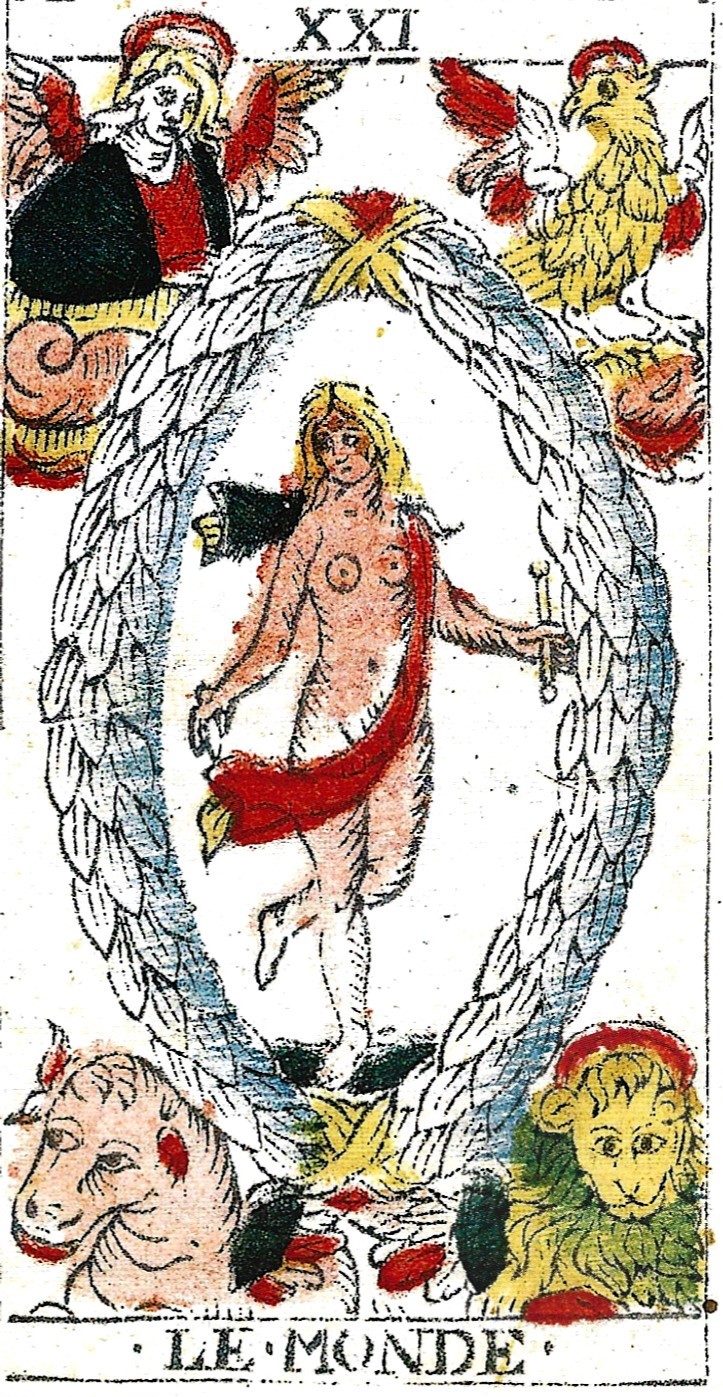
In case you’re new to the Tarot de Marseille world, let me introduce Yves Reynaud, a card maker based near Marseille, France, who produces facsimiles of rare and historic Tarot de Marseille decks. So far, he has produced eighteen French and Swiss decks, many of which only exist as a unique copy in a museum or private collection.
Yves’ tarot career parallels mine in many ways. We both discovered tarot history around the year 2000 when we joined the largest online tarot communities of the time, Aeclectic and TarotL. We both launched our websites in 2011/2012 with similar names (Tarot-de-Marseille-Heritage and Tarot-Heritage). I purchased his first deck in 2012, the Pierre Madenié. It’s been my preferred reading deck ever since.

Yves was interviewed twice this year, by Mascha Coetzee and Simon Ferandou, allowing us a rare opportunity to get acquainted with the person behind the decks. It was especially exhilarating for me to witness conversations between people who are passionate about tarot, but stay firmly rooted in the historic reality of the cards.
Let’s look at each interview, starting with Simon Ferandou on May 26, 2025. This two-hour video is in French with subtitles.

In the first half of the interview, we learn about Reynaud’s early life. Like many tarot students, Reynaud came to tarot by way of esotericism. He dabbled in reading for others, but quickly learned he didn’t have the qualities needed in a good reader. Later, he renounced esotericism for a more fact-based relationship with tarot.

The second half of the interview focuses on Reynaud’s current research. He’s especially interested in the engravers, printers and merchants behind the decks, as well as the workshop subculture of masters and apprentices. He’s fascinated by the material reality of these paper game pieces, as well as the craftsmanship that goes into their manufacture.
Interview with Mascha Coetzee, March 8, 2025
This interview begins with Reynaud summarizing his life-long involvement with tarot, going from esotericism to a more grounded relationship with the cards. He began his studies using France’s most popular mass-produced deck, the Grimaud Tarot de Marseille. For over a decade, he has been supplying tarot lovers with limited-edition Tarot de Marseille decks at an accessible price.
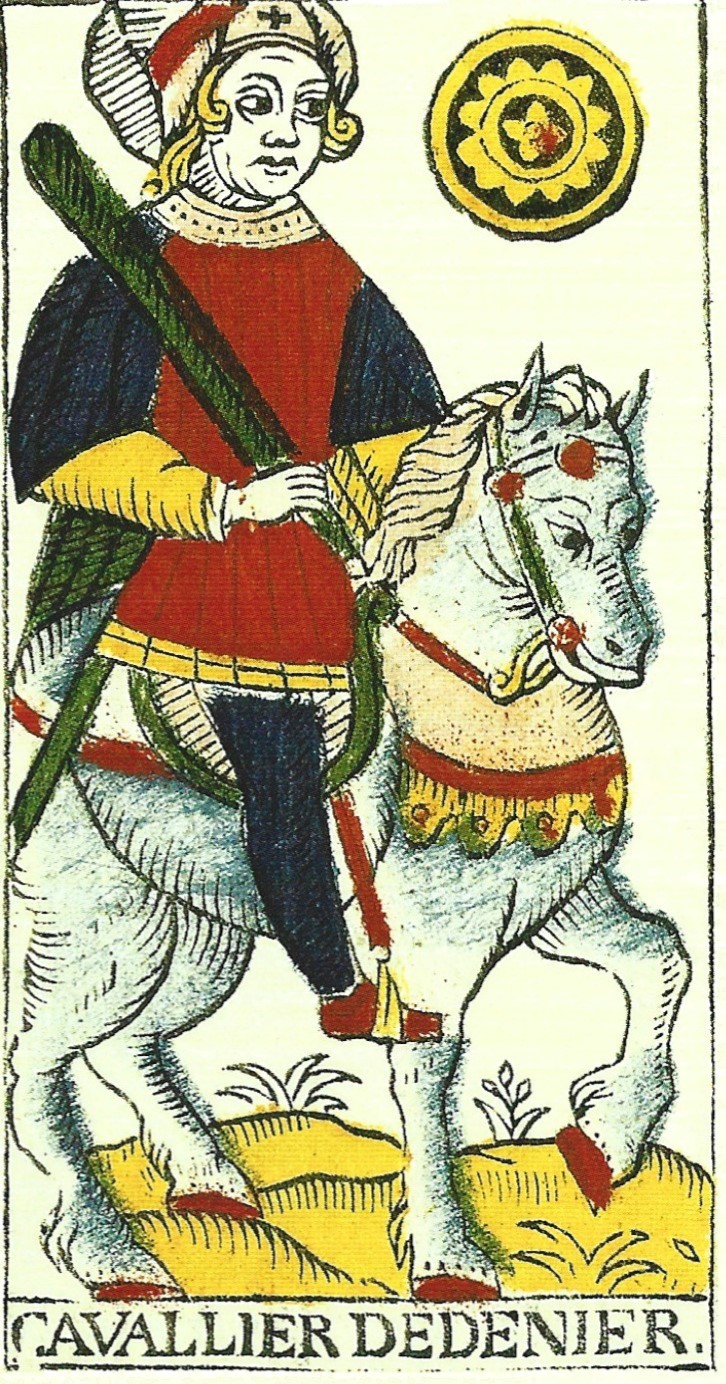
A conversation on the Aeclectic tarot forum inspired Reynaud to reproduce the Pierre Madenié tarot, one of the most beloved versions of the TdM. The Swiss National Museum of Zurich owns the only copy of this deck. Reynaud secured the rights to reproduce it, then he set up his Tarot-de-Marseille-Heritage website as an experiment to see what would happen when he marketed the deck. This concept was so successful, he produced the Chosson deck shortly after. Up to today, Reynaud has reproduced eighteen museum quality Tarot de Marseille decks.
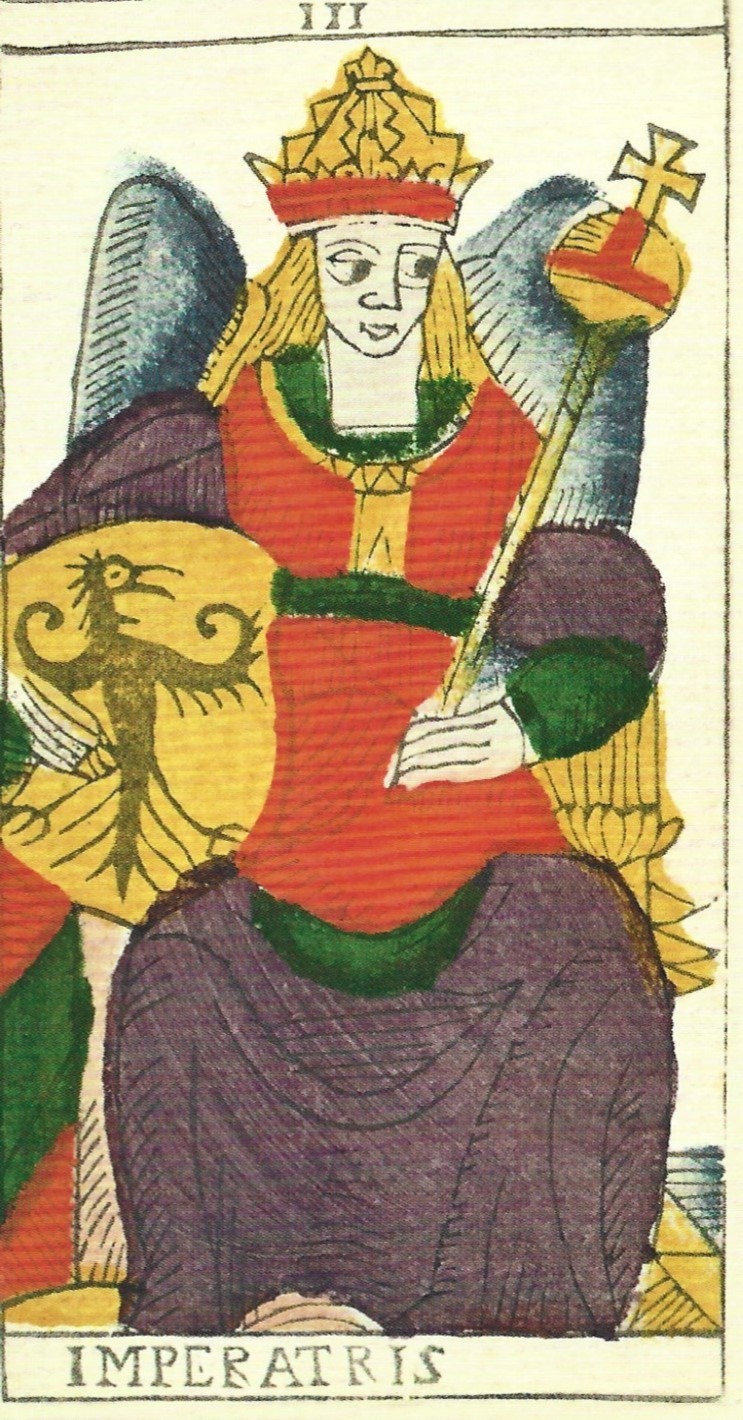
Recently, Reynaud acquired the oldest documented Tarot de Marseille deck (Philippe Vachier, 1639) at a Parisian auction. The deck is in excellent condition, and was unknown to the tarot world as it had been buried in a private collection. If another collector had obtained the deck, it would probably be hidden away in a vault until a future generation decided to sell it. By reproducing this deck, like all his decks, in an edition of 3,000, Yves made it possible for tarot lovers with modest means, like myself, to own this important piece of tarot history.
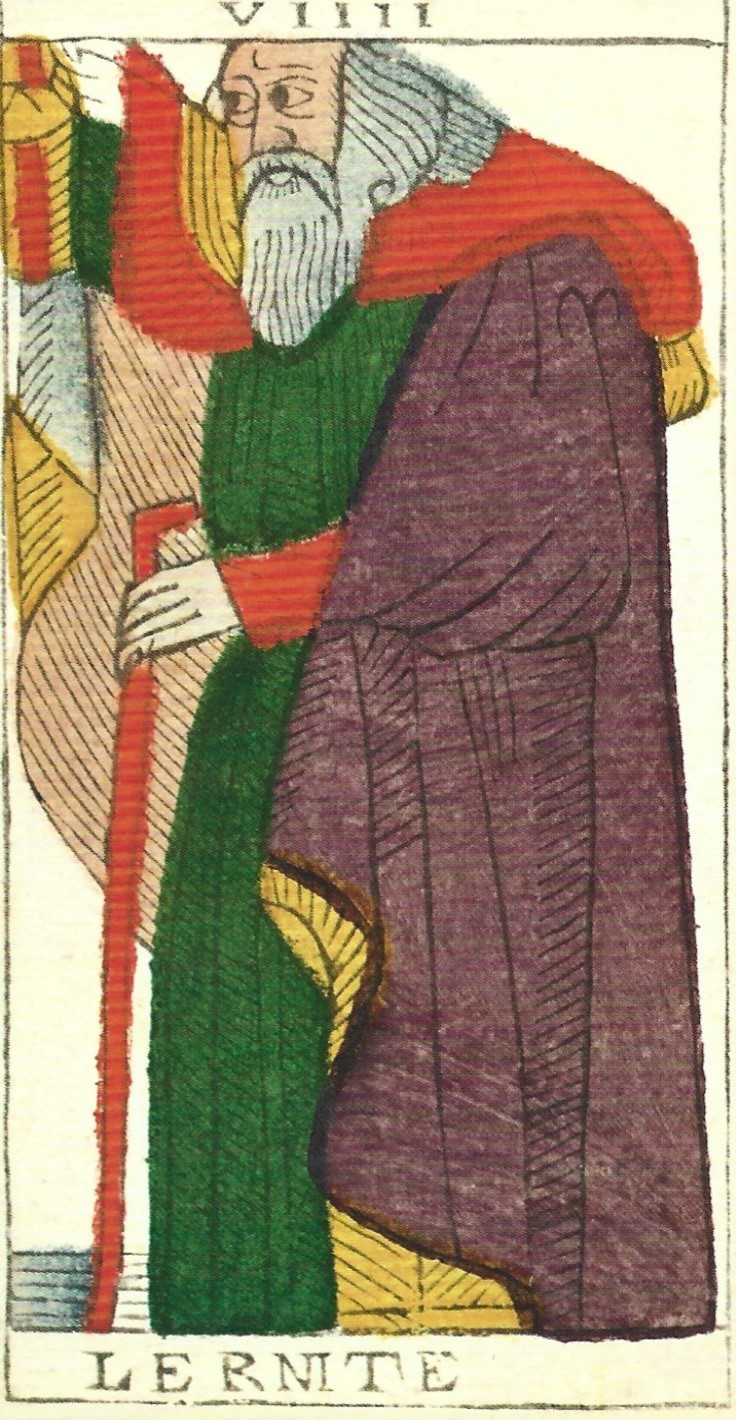
A few Vachier cards have worm holes, which have been digitally repaired; and the oxidized green ink has been lightened. Reynaud believes restoring the cards to their like-new condition shows respect for the original engraver and printer. The deep violet featured on the cards shown here only appears on the earliest 17th-century decks, since the ink became too expensive to use on ephemeral playing cards.
Mascha asked if there were any decks he considered underrated or less known than the other decks he’s produced. Reynaud’s response was the Claude Burdel 1751, and François Heri 1730. Let’s take these decks out of the shadows and have a closer look at them.
Claude Burdel was a French printer who relocated to Switzerland for economic reasons, as did many French card makers in the 18th century. The only copy of this deck resides in a museum in Marseille. The exuberant Aces are typically Swiss, while the Devil is unique in sporting a flower over his genitals.

The François Heri tarot is smaller than the typical deck (2.75 x 3.75 inches). This is a Besançon type deck with Juno and Jupiter replacing the Papesse and Pope. The furry Devil and the girl and boy on the Sun card are typical Besançon details.

In order to keep his decks reasonably priced and accessible, Reynaud has them printed in China in lots of 3,000, the minimum that’s economically feasible. The card stock is substantial and flexible, with historically correct square corners. Each deck is packaged in a sturdy box and is accompanied by an extra card with a handwritten note from Yves.
Visit the website to see and purchase all Reynaud’s decks
https://tarot-de-marseille-heritage.com/
Yves Reynaud interviewed by Simon Ferandou, May 26, 2025
https://youtu.be/ksQPi4yDIso
Yves Reynaud interviewed by Mascha Coetzee, March 8, 2025
https://www.youtube.com/live/BHEQA3XI6tw?si=CoD9hQIxgV043nOX
My article on the Vachier deck
https://tarot-heritage.com/2025/01/06/vachier-the-oldest-documented-tarot-de-marseille/#more-4609
My review of the Pierre Madenié deck
https://tarot-heritage.com/2013/05/11/the-pierre-madenie-1709-tarot-de-marseille-facsimile-deck/
List of Illustrations (all decks are available on the website linked above)
World. François Chosson, Marseille, 1736.
Sun. François Gassmann, Geneva, 1840.
Juno. Jacob Joerger, Besançon, 1801.
Bagatto. Claude Rochias, Saint Sulpice, 1754.
Knight of Coins. Pierre Madenié (2nd edition), Dijon, 1709.
Empress, Hermit. Philippe Vachier, Marseille, 1639.
Ace of Cups, Devil, Ace of Batons. Claude Burdel, Fribourg, 1751.
Jupiter, Devil, Sun. François Heri, Soleure, 1730.

 Tarot Heritage
I think there are 17 historical decks:
Philippe Vachier — 1639
François Chosson — 1672
Pierre Madenié — 1709
Jean-Pierre Payen — 1713
François Héri — 1718
François Héri — 1730
Jean-Pierre Laurent — 1735
Pierre Cheminade — 1742
Claude Burdel — 1751
Claude Rochias — 1754
Nicolas Conver — 1760
Joseph Feautrier — 1762
Arnoux & Amphoux — 1801
Johan/Jacob Jerger — 1801
Jacques Burdel — 1813
Suzanne (Bernardin Suzanne) — 1839
François Gassmann — 1840
Plus Wilfried Houdouin’s Tarot de Marseille – Edition Millennium (2022). That makes 18. Is that right?
I’m a big fan, as I have all the historical decks except his Conver and Suzanne.
Best, Chris
Hi Chris, I’m so glad you posted your list. I didn’t count Houdouin’s deck, and I must have counted Madenié twice since I have the first and second editions. Comparing your list with what’s on my shelf, I just realized, with much horror, that I don’t have the Bernardin Suzanne deck. Thanks for the reality check.
All the best
Sherryl
I missed the Chosson 1736. That would make 18 historical decks. (I don’t have that one either.)