Skip to content

Welcome!

Hello, and welcome to my blog. This is where I’ll share book reviews, my favorite tarot decks, tidbits of tarot history, and some ideas I’m working on that combine tarot and astrology. I’ll also bring you news and reviews about Italian books and websites. Please explore the other pages on this site for in-depth articles on tarot history and tips on reading with historic decks.
Mitelli and Barattini: Two Generations of Tarocchino Bolognese

Bolognese Hanged Man

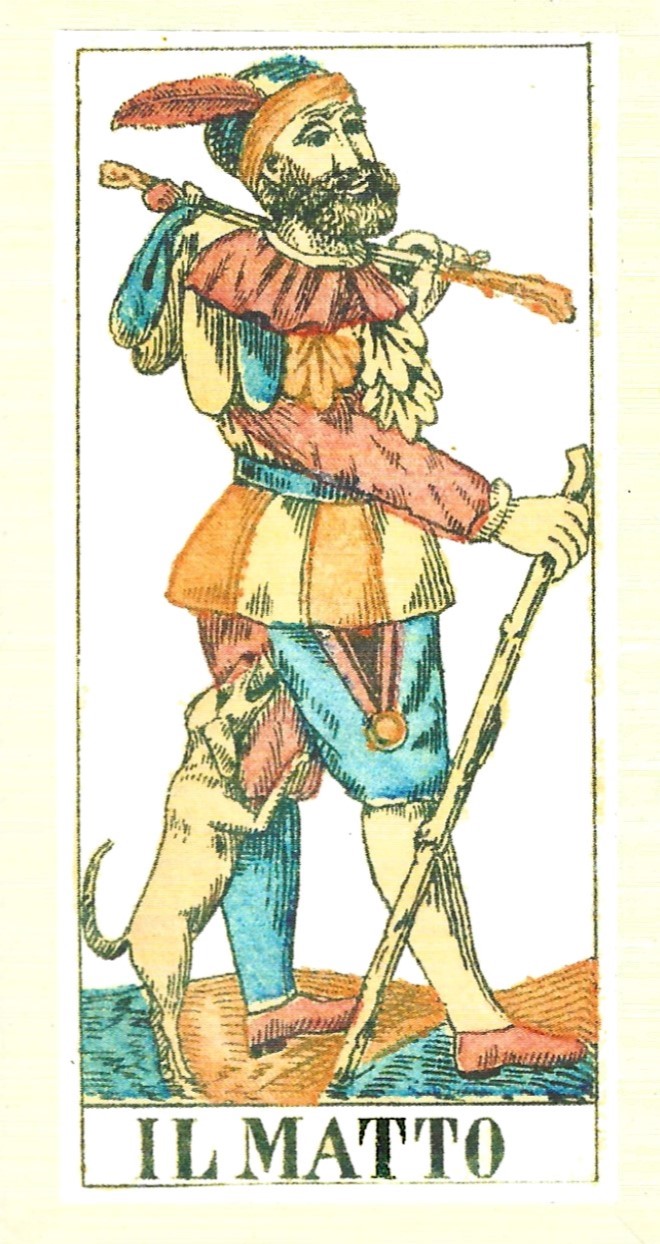
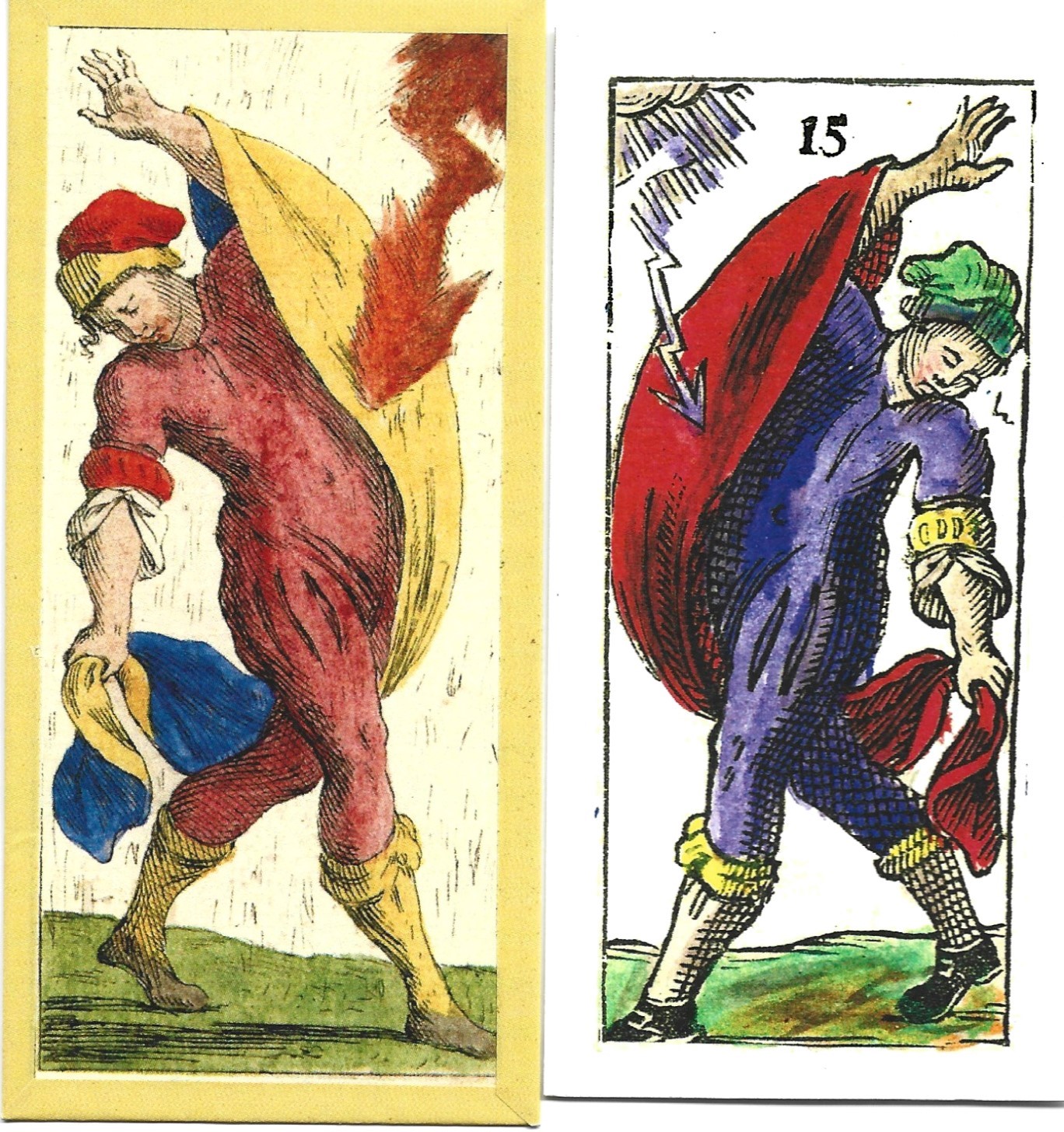
About 1660, Count Filippo Bentivoglio of Bologna commissioned a luxurious tarocchino deck from artist and copper engraver Giuseppe Mitelli. Over 140 years later, in 1803, his descendent, Count Luigi Bentivoglio, hired engraver Francesco Barattini to create a faithful copy of his ancestor’s deck in wood block. This is unique in tarot history: two generations of the same family commissioning two versions of the same tarot deck. We are privileged to have reproductions of both the Mitelli and Barattini decks by the same card maker, Marco Benedetti of Rome. Let’s take a close look at Barattini’s deck and how it differs from the original Mitelli.

Read more

Soprafino: Nineteenth-Century Tarot in Milan

One of the most beautiful examples of Milanese tarot landed on my doorstep a few weeks ago. Originally printed by Bordoni of Milan in 1885, it’s been reproduced by Marco Benedetti with his signature bordi rivoltinati (paper borders folded over from the back). This gorgeous deck (example on the left) led me down a rabbit hole where I pulled out all twenty of the Milanese decks in my collection and sorted through the different varieties. From the 1830s to 1890s, this distinctive tarot, with graceful lines and luscious colors, was the trademark deck of Milan and surrounding territories. It began with the Soprafino tarot printed by Ferdinand Gumppenberg about 1830 from copper plates engraved by Carlo Dellarocca. Let’s look at the origins and the evolution of this style, how it differs from the Tarot de Marseille, and the decks that are available for purchase at this time.

Read more

A Guide to Reading with the Tarot de Marseille

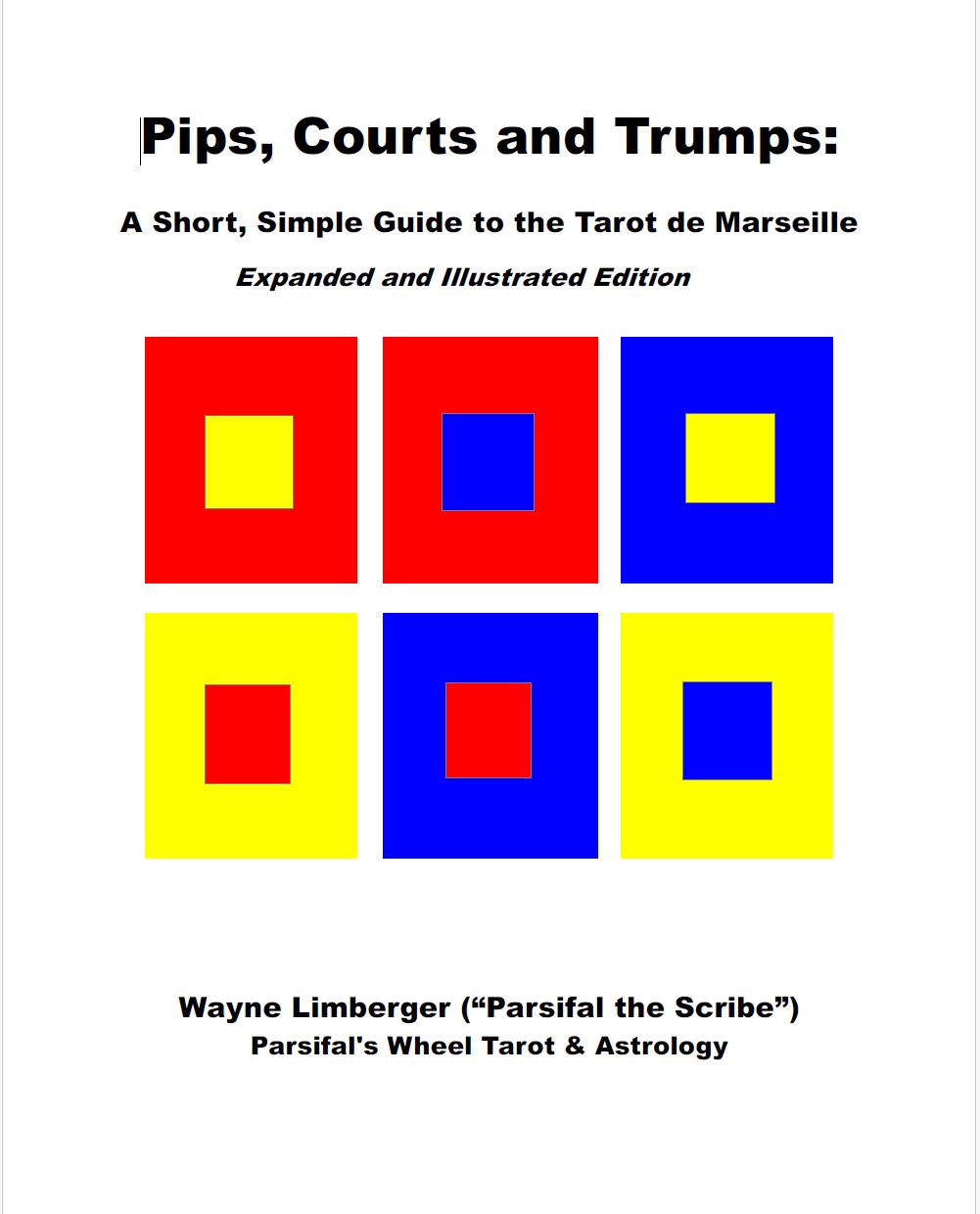
One of my favorite tarot bloggers, Wayne Limberger at ParsifalsWheelDivination.org, has come out with a guide to reading with the Tarot de Marseille (available at Lulu.Com). The author has been reading tarot for the public with the Thoth and Waite Smith decks for forty years, and has been blogging for nearly a decade. He knows how disorienting it can be to try reading with a deck that not only has no scenes on forty cards, but was created for playing a game with no reference to astrology, Qabala, or any other esoteric framework the reader might be familiar with. If you want to experiment with the Tarot de Marseille, Limberger provides a practical handbook filled with advice from an experienced reader who understands the struggle to read with those strange and abstract Tarot de Marseille cards.

Read more

Two Interviews with Yves Reynaud


In case you’re new to the Tarot de Marseille world, let me introduce Yves Reynaud, a card maker based near Marseille, France, who produces facsimiles of rare and historic Tarot de Marseille decks. So far, he has produced eighteen French and Swiss decks, many of which only exist as a unique copy in a museum or private collection.

Read more

Vachier: The Oldest Documented Tarot de Marseille

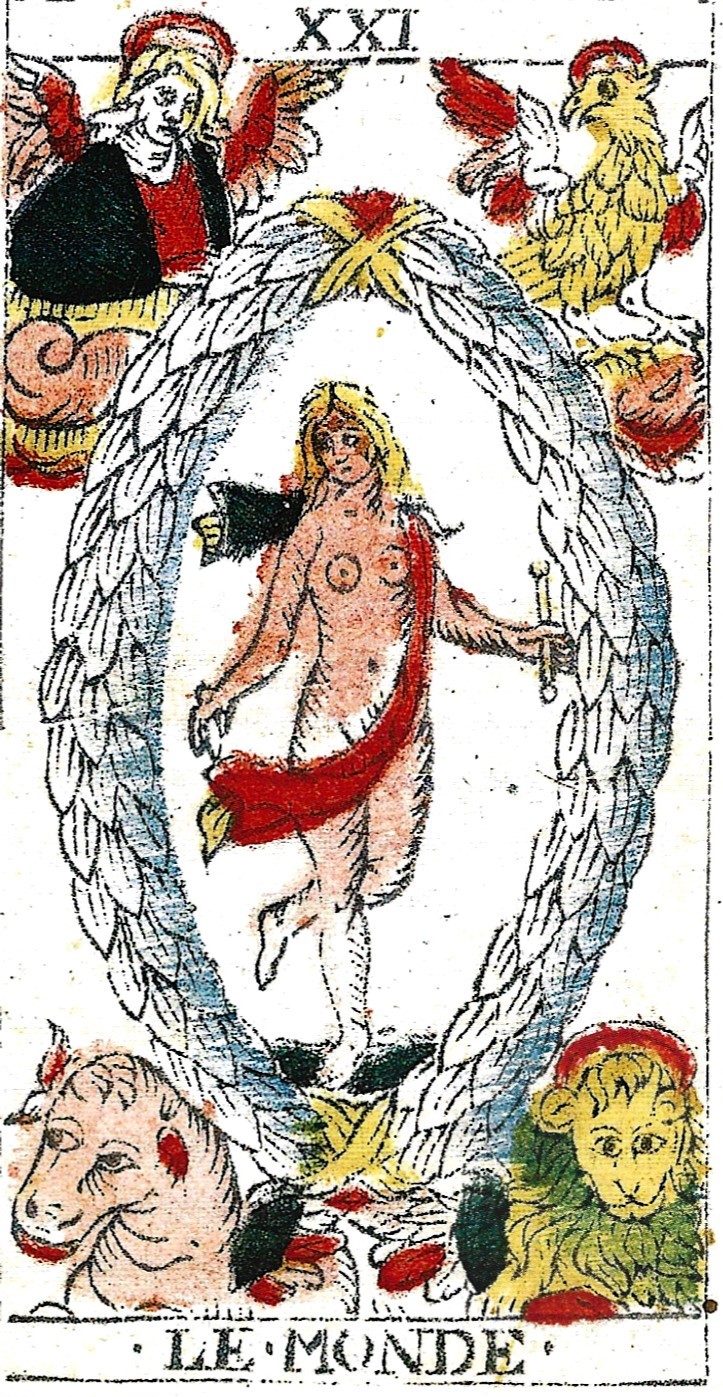
A flurry of excitement rippled through the tarot world in early 2023 when a previously unknown Tarot de Marseille, dated 1639, was auctioned in Paris. This very special deck is the earliest documented TdM we know of, and is in nearly pristine condition.

When it sold for a very large sum, I lamented that it would probably disappear into the vault of a private collector, not to be seen again in my lifetime. Happily, I was very wrong. It was purchased by card maker Yves Reynaud of Marseille, who has given the world many facsimiles of rare TdMs. Recently, he published a lightly touched up version of the Vachier deck, which is now available to purchase.

Read more

Marco Benedetti’s Personal Madrone Deck

Marco Benedetti’s restored Visconti di Modrone deck is a magic carpet ride to a late medieval world of elegant lords and ladies and knights in shining armor. A world where fabulously wealthy aristocrats commissioned trionfi decks drenched in silver and gold from the greatest artists of the day.

The Modrone deck was most likely a wedding gift, and is one of most romantic and feminine decks of the fifteenth-century. The cards have pink borders filled with delicate blue flowers, and the six court cards in each suit are arranged in three male/female pairs.

What remains of the original deck is too fragmented to be useful for divination. Benedetti’s vision was to produce not only a beautiful work of art, but to bring the deck to life in a version useful for shuffling and reading. To accomplish this, he is offering the deck in two sizes: the original large size in a custom-made wooden box, and a smaller deck designed for ease of shuffling. Benedetti has filled out the missing trump and court cards beautifully, retaining the aristocratic elegance of the original International Gothic style.

Let’s take a close look at the deck and at Benedetti’s choices for replacement cards.

Read more

A Yes-No-Maybe Tarot Technique

I generally use tarot for diving into the murky depths of my psyche. But sometimes I just want to be told what to do! I’ve tried various Yes/No spreads with dismal results, so I just gave up on the whole idea. Then the other day, while sorting through some old papers, I found notes on a technique I learned in a workshop with Mary Greer and Rachel Pollock at the Omega Institute in Rhinebeck, NY. This technique provides a nice balance between getting a cut-and-dried Yes/No answer and gaining insight into the situation. I’ve tweaked it a bit and it’s been giving me solid advice ever since I started experimenting with it a few years ago.

This spread answers one question: “Should I …..?”
Should I send out for pizza? Should I tell my boss where to shove the job? Should I get a puppy?

It doesn’t help you evaluate pros and cons. It advises you on whether to do the proposed action or not, then tells you the consequences of following the card’s advice.

Read more

Loving Pierre Madenié

Hundreds of decks have passed through my hands during my fifty years with tarot; and I’ve been reading with a few that I really love for decades. But I never became instantly infatuated with a deck until I unboxed the 1709 Pierre Madenié in 2013. This was the first deck I ever purchased from Yves Reynaud, and I was thrilled to own such a faithful reproduction of an historic deck. Adding to the magic, when I opened the package from France, something tiny zipped through the air in front of my face and brushed my cheek. I was sure a tarot fairy had been set free from the package. I knew instantly that this was no ordinary deck!

Read more

Etteilla: The First Modern Card Reader and His Reconstructed Decks by Marco Benedetti

Let’s celebrate Etteilla, the eighteenth-century cartomancer who laid the groundwork for our contemporary tarot reading practices. After writing numerous books on divination, seeing clients, running a school, and establishing a tarot society, he found time to design a tarot deck that has been in print, in slightly altered form, for over 200 years.  Now for the first time, thanks to Marco Benedetti’s reconstruction, Etteilla’s original tarot deck, as he conceived it, is available to the public. Before taking a close look at Etteilla’s tarot, we’ll review his amazing career.

Read more

I Tarocchi del Mitelli by Marco Benedetti

Mitelli Tarocchi

Today I’m celebrating the artistry of Giuseppe Maria Mitelli along with Marco Benedetti’s luxurious new edition of Mitelli’s tarocchino. I’ll begin by describing Benedetti’s deck; then, I’ll give some background on Mitelli, his artistic output, and the distinct features of his deck. We’ll conclude by looking at other copies of the deck in various museums. But first, what is a tarocchino and what makes this deck so different from other historic tarot decks?

Read more