
Tarocchi e Racconti (Tales of Tarot): A 12-Part Video Series
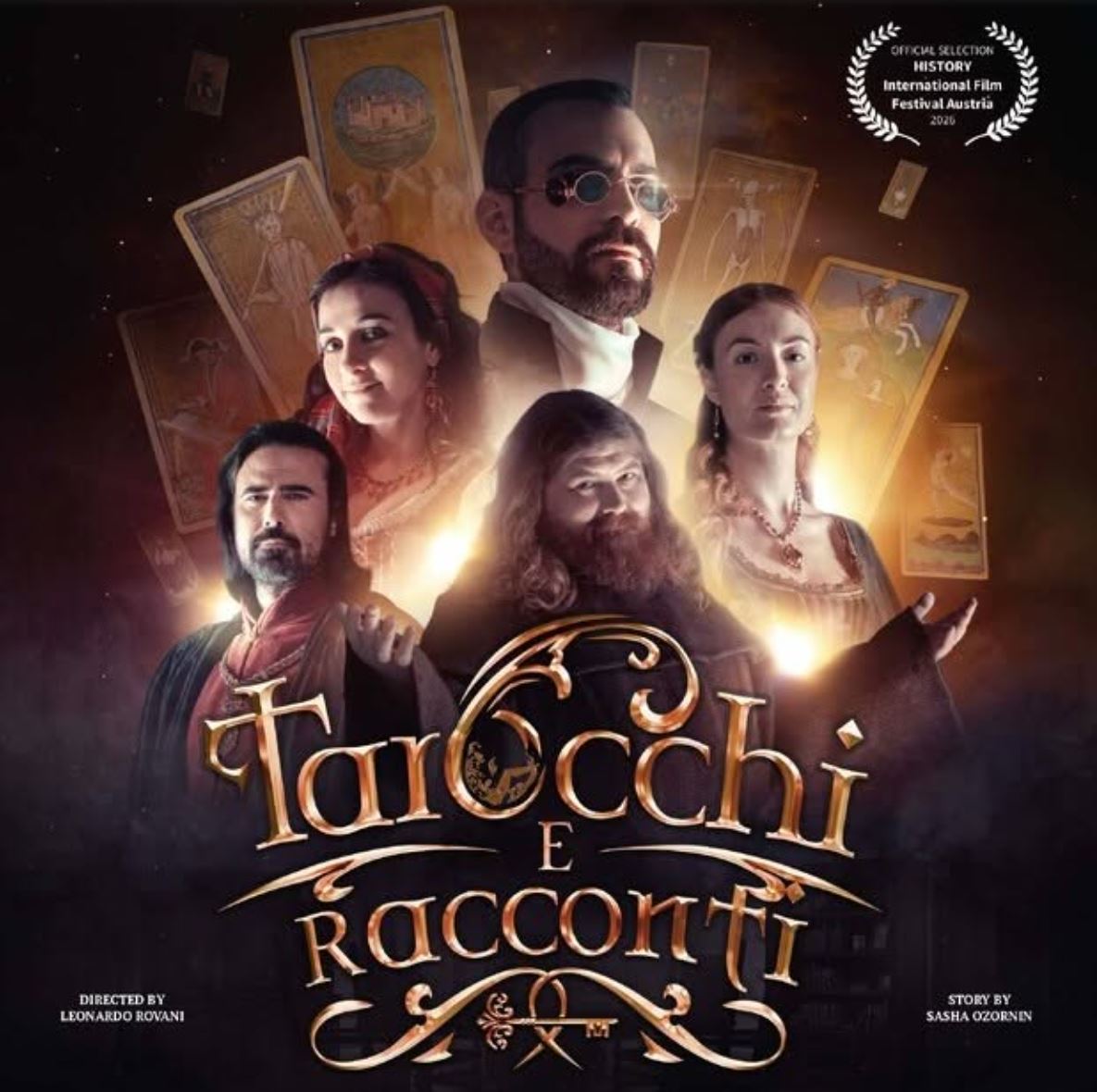
For the past few weeks, I’ve been totally mesmerized by this fascinating six-hour video series. It seems my Fairy Godmother conjured up this blend of solid history and entertaining fiction to address the very questions that have fueled by tarot research for the past twenty-five years. Picture a group of fifteenth-century card players sitting around a table holding cards like the Hanged Man, Tower, or Judgment. What stories do they tell about those pictures? Can they connect the figures on the cards to anything in their popular culture? Do they take away any moral lessons from the cards? Is it possible for a modern card reader to bridge the six-hundred-year gap and view these enigmatic images through the eyes of a fifteenth-century Trionfi player?
To my astonishment, I discovered that the Tarocchi e Racconti video series addresses these questions with impeccable history, breathtaking examples of early renaissance art, and intriguing card interpretations. Each fast-paced episode alternates between fictional characters discussing the cards, and prominent tarot historians connecting tarot imagery to late-medieval and Renaissance culture.
Get easy access to the series at this link: tarocchieracconti.com
There’s more technical information at the bottom of this article.
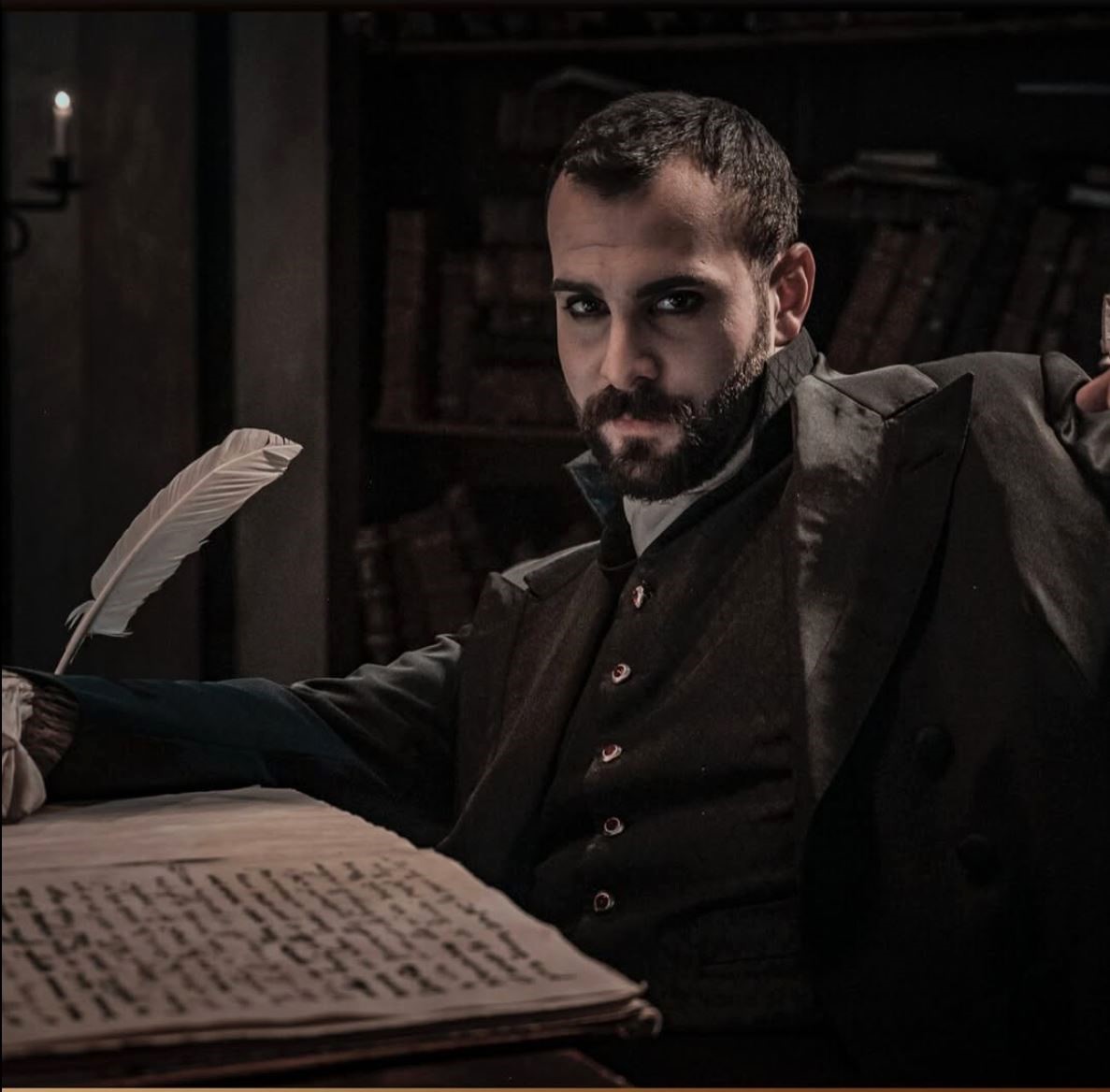
A fantasy thread binds the twenty-two 15-minute segments (one for each trump card) into a continuous narrative. An entity from another dimension, who calls himself “Parsifal”, transports four people to a candlelit room beyond space and time. He keeps the four trapped in the room until they tell him everything they know about the origin and meaning of each tarot card. Each fictional character comes from a different time, spanning the first few centuries of Tarot’s history. As they examine the fifteenth-century Visconti-Sforza and Visconti di Modrone decks, and the seventeenth-century Tarot de Marseille, they discuss possible card meanings from their unique historical perspectives.
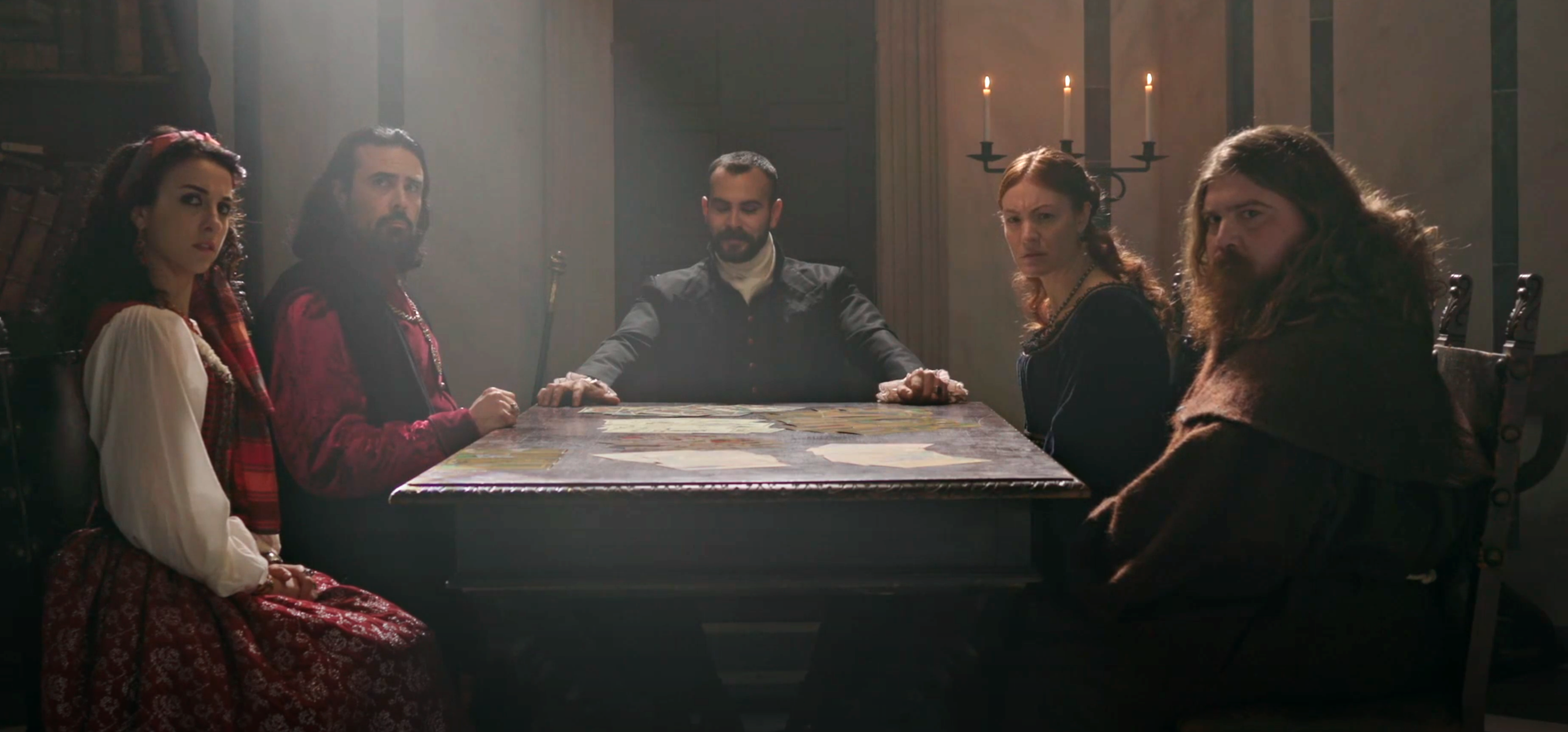
Two of the fictional characters, General Barbereschi and Madama Altini, represent the high Renaissance ruling class. They offer conventional card interpretations; and the lady also presents a view of tarot’s origins that is biased toward the ruling class. (We’ll get into more of that later.) The hotheaded friar, Filippo Campani, sees demons everywhere, and clings obsessively to the notion that the Knights Templar invented tarot to propagate their heretical beliefs. He conveniently ignores the fact that the King of France crushed the Templars over a century before the tarot deck was invented. The good friar seems to be a stand-in for those tarot students who cling fiercely to their pet theories, in spite of massive evidence to the contrary. Lady Lavinia, the young Roma woman sitting opposite the friar, takes the role of his exasperated foil. She was transported to the locked room from the cusp of the Age of Enlightenment, before tarot acquired an overlay of exoticism and occult mysticism. Her card interpretations combine hardheaded rationality with expansive psychological and spiritual insights.
These videos maintain a tight focus on tarot’s first few centuries. Card interpretations remain firmly rooted in late-medieval and Renaissance culture. Occult systems, like those of Etteilla and the Golden Dawn, as well as other anachronisms, are mercifully absent.
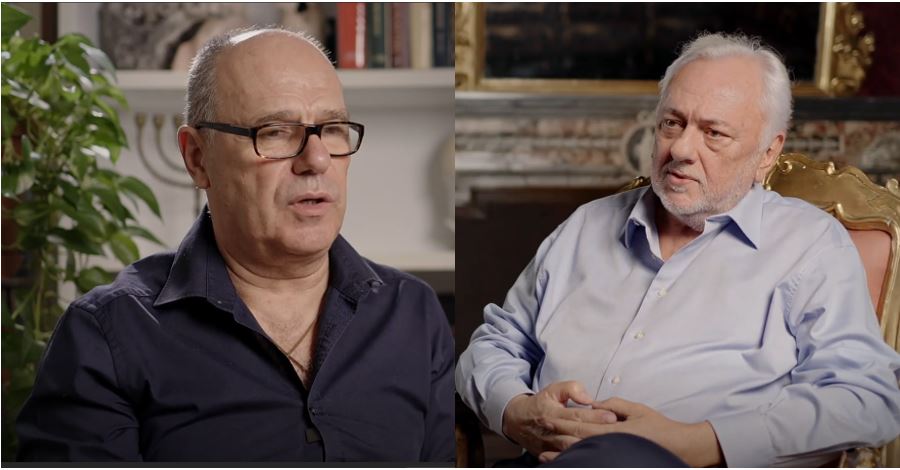
We’re kept grounded in Tarot’s early history by two highly respected scholars of tarot iconography: Giordano Berti (left) and Andrea Vitali, with occasional help from Marina Poltronieri and Ernesto Fazioli of the Museo dei Tarocchi in Riola, Italy. These historians demonstrate how late-medieval, Christian card players viewed the figures on each tarot card. The images may seem exotic to us, but they were a normal part of fifteenth-century popular culture.
I was surprised to learn that the Hanged Men painted on city walls not only called out traitors, but served as wanted posters, displaying the criminal’s name and the reward for capturing him. In the fifteenth century, the Tower card was called either “fire” or “arrow”, emphasizing God’s punishment, rather than the tower itself. In medieval popular astrology, Il Matto (the Fool) and Il Bagatto (the Magician) were regarded as Children of the Moon. But in Episode 2, we learn how both characters were closely aligned with the Devil in the medieval mind. Every episode contains intriguing nuggets like these.
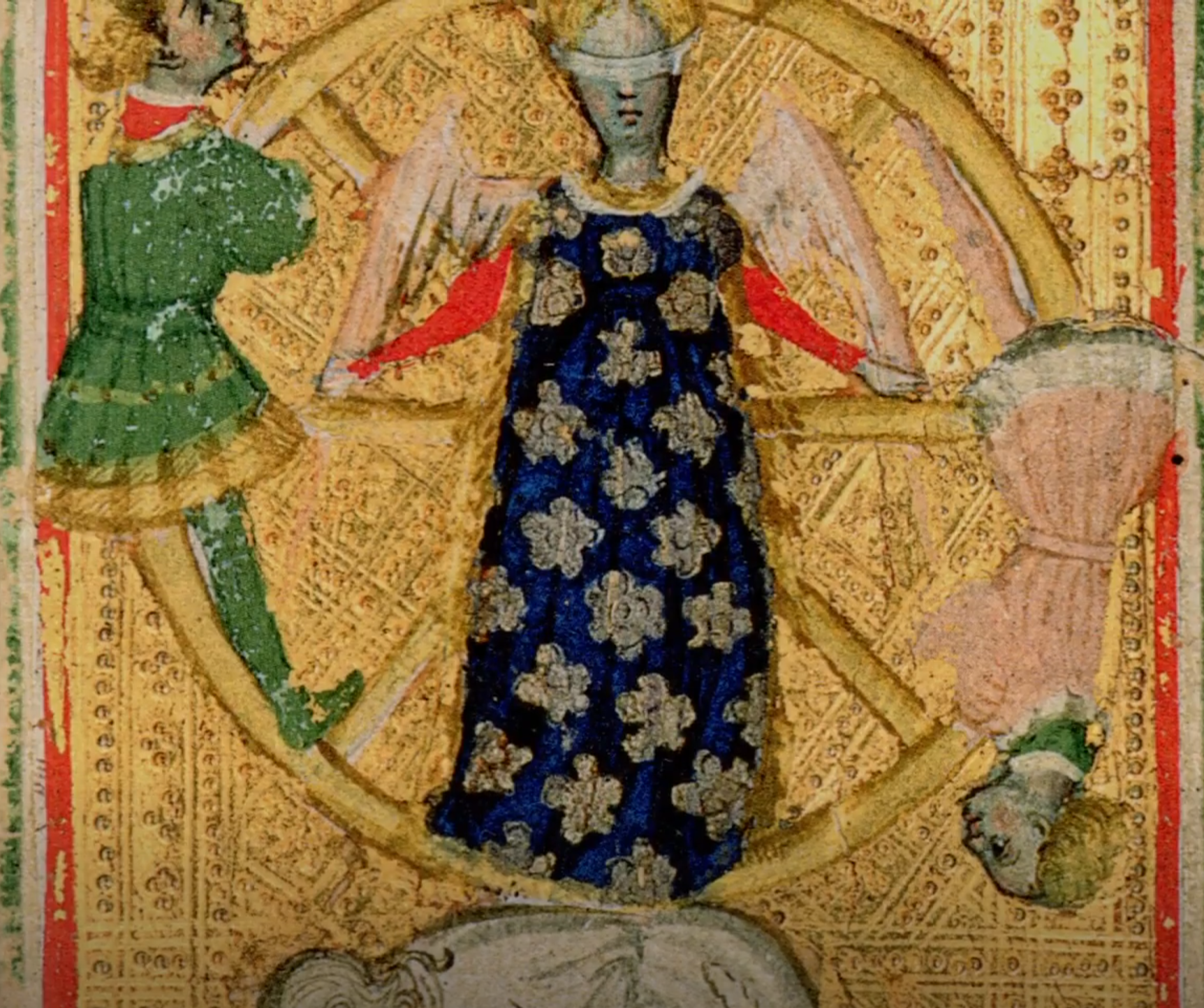
The photography is gorgeous. The camera lingers over closeups of those golden fifteenth-century cards, giving us time to admire the exquisite embossed gold and the delicate tempera paint. We are treated to numerous examples of the art that people in those times encountered on the streets, in churches, and in public buildings.
I’m wildly enthusiastic about this series and its thoughtful examination of tarot’s early history. But, for the sake of accuracy, I have to point out a place where I believe some facts have been distorted.
Episode One presents two mutually exclusive stories about tarot’s origins: Either someone in the educated middle class invented the game, which was adopted by the ruling class a few decades later; or, the game was initially confined to the elite, who commissioned luxurious golden decks. Decades later, the game trickled down to the lower classes. I have to admit I’m partial to the middle-class origin theory, so perhaps I’m a bit biased. But, it seems to me, the writers of this episode ignored evidence and played fast and loose with certain details to bolster their preferred ruling-class theory.
Halfway through Episode One, Berti presents evidence that tarot decks were being mass-produced in 1450. Actually, there is evidence of this from the early 1440s. These block-printed decks were being produced at the same time as the gold-embellished decks of the ruling class. This opens the way for the theory that tarot originated in the middle-class, probably in the 1430s, then migrated upward to the ruling class by 1441, when it became a fad among the super-rich to commission decks smothered in gold leaf.
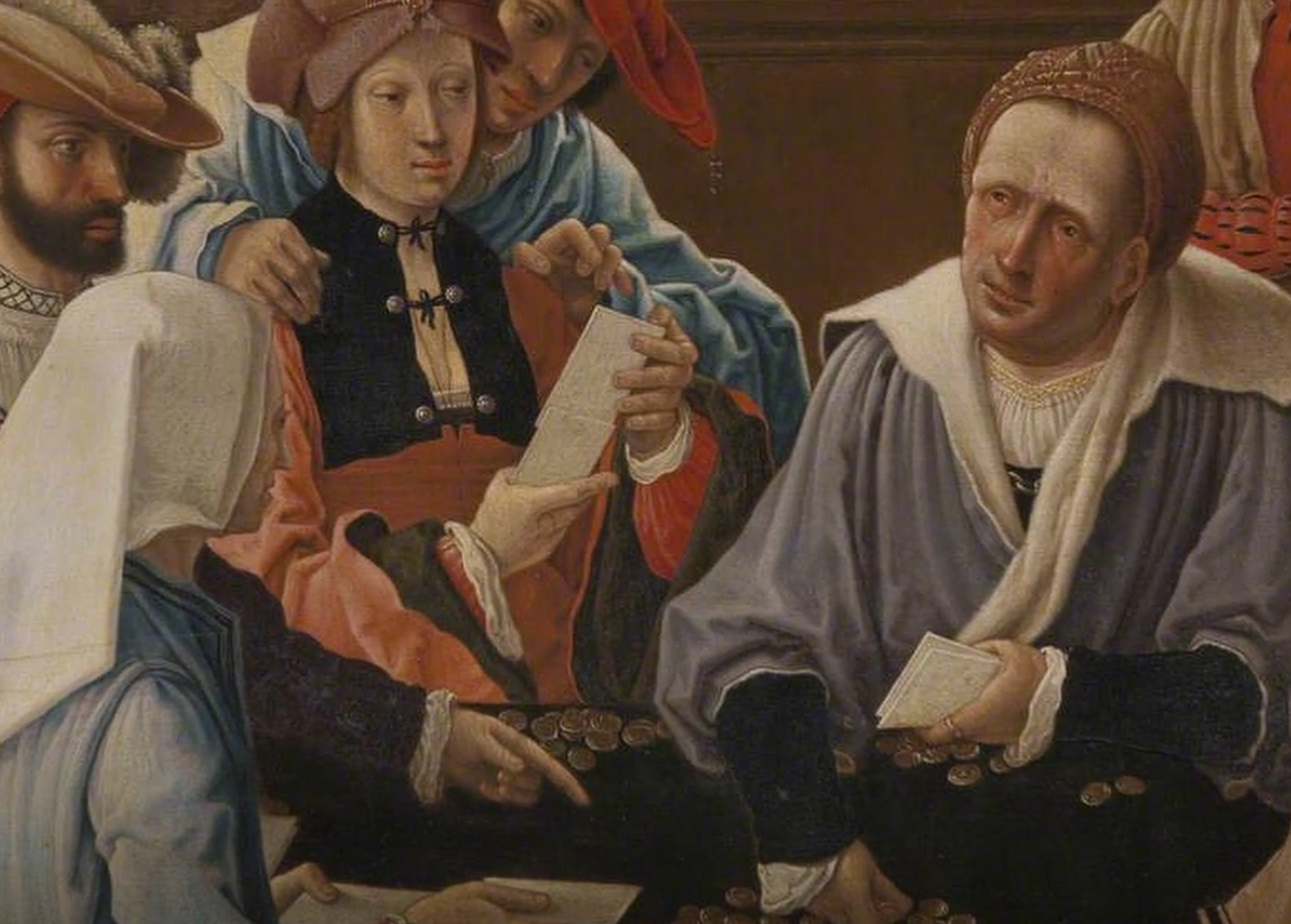
The idea that Tarot originated in the ruling class seems to be preferred by certain museum curators and others who want a neat, glamorous story that appeals to the public. According to this story, the game of Trionfi/Tarocchi/Tarot, with its extra suit of illustrated cards, was invented for the moral education of the ruling class. The first tarot decks were the luxurious, golden decks, like those produced in the Bembo workshop for the Visconti and Sforza families. Tarot was confined to the elite for several decades, until the game spread to other social classes.
Episode One takes this story much further. According to the writers of this episode, the game of tarot was invented at the Visconti court in the 1440s, and was not adopted by other social classes until the deck migrated to France about 1500. The Duke of Milan’s gold florins provide the proof. Duke Filippo Maria Visconti issued gold florins from 1440 until his death in 1447. This florin appears in the suit of coins of the Visconti di Modrone tarot deck, which he most likely commissioned. We can safely say that the Modrone deck was created between those dates. But the video states that the game of Tarot itself was invented at that time. This is not possible, as we have documentary evidence of tarot existing in other cities as early as 1441.
This error occurs because two decks are conflated: the Visconti di Modrone tarot deck of the 1440s, and the Game of Sixteen Deities created for the duke in the 1410s. This earlier card game is considered a prototype for trionfi-style games, but its structure and iconography are very unlike the tarot deck. During the final wrap-up of Episode One, Madama Altini shifts the gold florins of the 1440s onto the deck created in the 1410s; then she triumphantly proclaims that the game itself was invented between 1440 and 1447.
Episode One presents additional evidence, propped up on shaky foundations, that tarot began with the elite. We are told the game could not be taken up by the middle class until the printing press made inexpensive, mass-produced decks possible. This ignores decades of inexpensive, mass-produced, block-printed decks that had been available to the middle class since playing cards entered Europe in the 1370s.
The name shifted from trionfi to tarocchi around 1500, just as the game was arriving in France. Since the word tarocchi refers to a foolish or quarrelsome person, some historians believe this proves that the game of Tarot was filtering down to the lower classes. We have already been told that tarot’s proliferation beyond the upper class happened in France after 1500. But tarocchi is an Italian word, so its meaning doesn’t seem relevant here. Besides, we have documentary proof that working-class Italians were being arrested for disorderly conduct and gambling with tarot cards long before France entered the picture.
It’s unfortunate that this free episode distorts tarot’s origin. But Berti and Vitali give us solid, historically accurate information in the next eleven episodes. I learned many surprising things by watching them, and I’m sure you will too.
Cellini Art Fund is a documentary production company specializing in art history. In this series, they present Tarot as a product of late-medieval, Christian culture, before it became a tool for divination and for organizing esoteric theories. In October 2026, the Tarocchi e Racconti video series was screened at the History International Festival in Austria, and at the Tarot Museum of Japan in Tokyo during its fifth anniversary celebration. Japanese subtitles should be available by late November.
PURCHASING INFORMATION
Go to tarocchieracconti.com to watch the trailer, get free access to the first episode, and purchase unlimited access to all twelve subsequent episodes. Dialog is in Italian with a choice of English, French, Spanish and Italian captions.
The free, introductory, half-hour video sets the stage, introduces all the players, discusses tarot’s origins, and gives the flavor of the entire series. The subsequent half-hour episodes, which devote fifteen minutes to each trump card, are packed with art, history, and insightful card interpretations. The link for free access to Episode One is toward the bottom of the landing page. Unlimited access to the series costs about $40 US, what you would pay for a moderately priced tarot deck.
If I were a filmmaker instead of a blogger, this is the video series I would have created. If you are interested in Tarot’s early history, mesmerized by the beauty of those lavish golden decks, or fascinated by the culture from which tarot emerged, then you must see this indispensable video series.
I invite you to share your reaction to the series in the comment section below.


